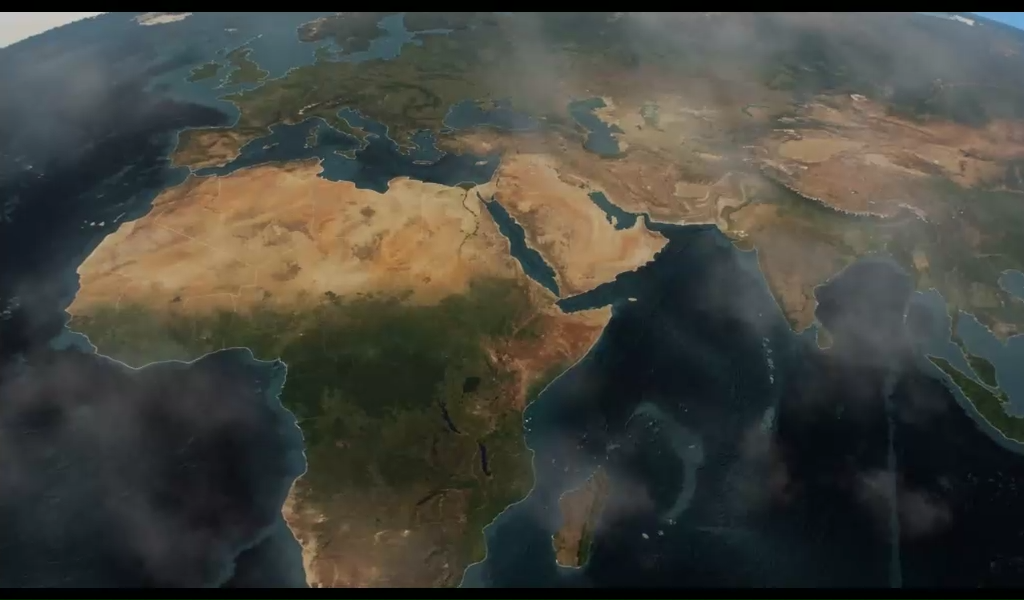
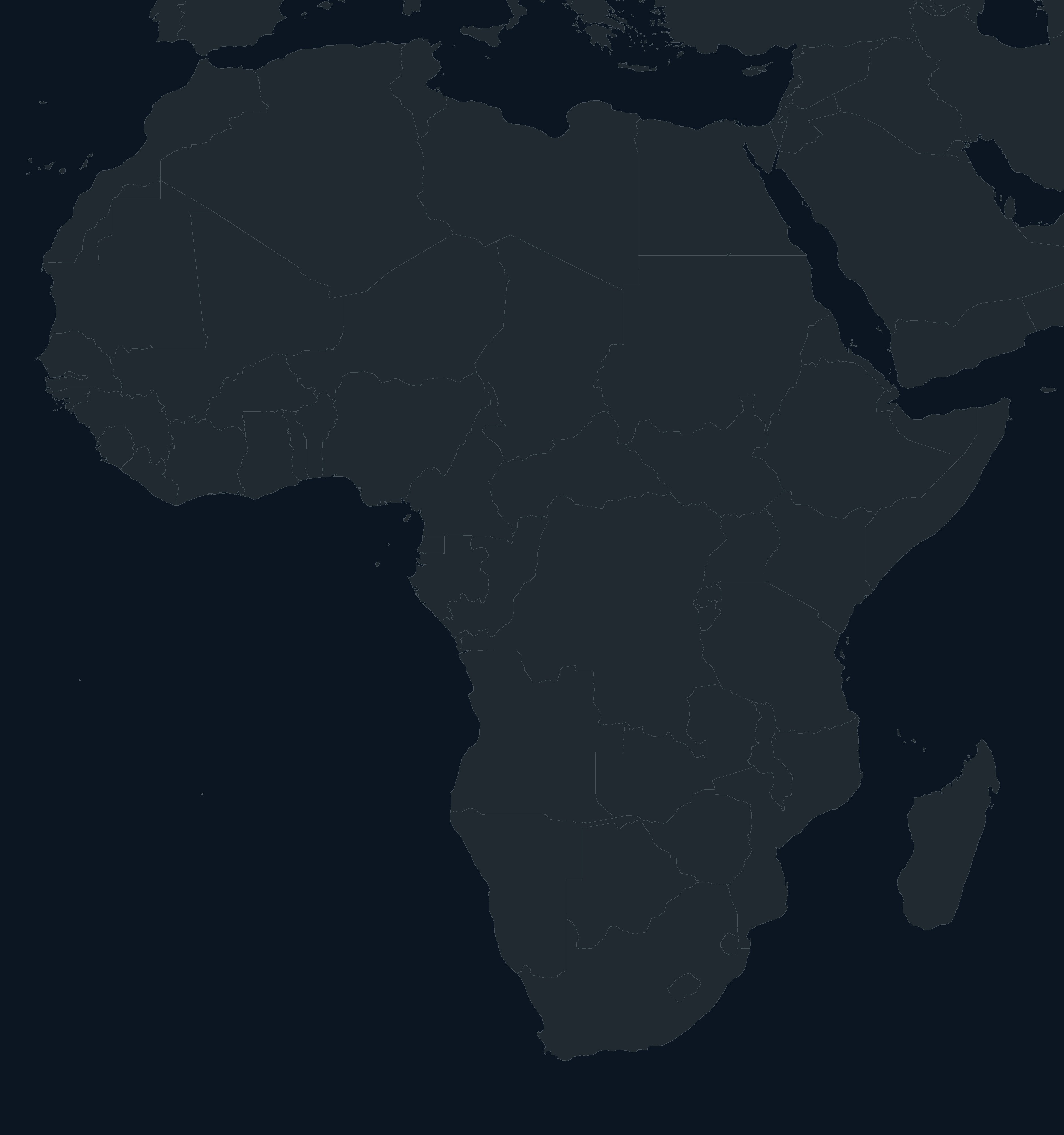
Where are food crises likely in the coming months? FP-EWS, a food-crisis early warning system we are building as a research prototype, puts a probability on that question for 507 provinces in Africa, Afghanistan, Guatemala and Haiti. Its latest forecasts, issued on 23–25 October 2026, are on the globe above. FP-EWS is a work in progress, and its forecasts are unvalidated forward forecasts, not official classifications. This page sets out what they show, how the model behind them was tested, and where it falls short.
What the globe shows
Each forecast answers one question: how likely is FEWS NET, the US-funded Famine Early Warning Systems Network, to classify at least 20% of a province’s people in IPC Phase 3 (Crisis) or worse? It is asked for each of the next three FEWS NET periods: October 2026, February 2027 and June 2027.
The globe covers 441 provinces (admin-1 units) in 30 African countries and 66 provinces in Afghanistan, Guatemala and Haiti. Each province is drawn as a prism that grows taller and redder as the probability rises. A dark outline marks the 0.20 warning line, and a dashed blue outline marks the provinces forecast by the no-map model described below. Hover a province for its probability, the range across the model’s members and its last FEWS NET map. Any other country is named as not monitored by FP-EWS.
Show on the globe: the whole watchThe furthest month, June 2027
What the October 2026 forecasts say
In Africa, 403 of the 441 provinces have a forecast. At or above the 0.20 warning line are 110 provinces for October 2026, 116 for February 2027 and 135 for June 2027. The newest FEWS NET map behind them is from June 2026.
Outside Africa, 26 of the 66 provinces are at or above the line for October 2026, 32 for February 2027 and 38 for June 2027. FEWS NET’s archive for these countries ends in 2021 for Afghanistan and in 2022 for Guatemala and Haiti, so every forecast there comes from the no-map model. The test results below say how far to rely on it.
Show on the globe: beyond Africa
Two models, one for where FEWS NET is silent
The forecasts draw on CHIRPS rainfall, UCDP conflict events, the ENSO and Indian Ocean climate indices, and each province’s own history of FEWS NET classifications.
Two models share the work. O3 is used wherever FEWS NET has published a recent map. O3n, the no-map model, is used where FEWS NET has been silent for two years, and works from each province’s older FEWS NET history alongside rainfall, conflict and climate. In Africa it is about 40% less accurate than O3 with a recent map: the cost of forecasting without one.
Where FEWS NET is silentThe Kenya pilot
Tested before it is scored
Every test is pre-registered and frozen by hash before any data it is scored on exists, and its result is reported whether it passes or fails. Every forecast on the globe is itself a forward test, frozen before the FEWS NET maps that will score it are published. None has been scored yet.
Skill is measured as Brier skill: how much more accurate the probabilities are than a simple reference forecast, either the long-run crisis rate (climatology) or the last known classification (persistence).
Work in progress
FP-EWS is still being developed. The two fails below are fails for now: the models behind them are being reworked to put them right. Each fix will be tested the same way as everything else here, pre-registered and frozen before it is scored, and its result reported whether it passes or fails.
Brier skill +44.9% over climatology and +16.7% over persistence at 3 months ahead.
+26.1% over climatology and +8.5% over each province’s own old history at 3 months; about 40% less accurate than O3 with a recent map.
Better than the countries’ old crisis rate, not better than each province’s own history. It worked in Afghanistan, not in Guatemala or Haiti.
Beats climatology (+37.9% at 3 months) but not persistence.
At 0–4 months FEWS NET’s analysts are the better guide, above all at crisis onsets.
Taken together, the results describe a statistically tested model that adds information where FEWS NET is silent, and that defers to FEWS NET’s own analysts where they publish.
Show on the globe: the test results
How to read this
The probabilities are unvalidated forward forecasts, not official classifications. Where FEWS NET or the IPC publish, their own analysis is the reference: in Kenya, FEWS NET’s analysts were the better guide at 0 to 4 months, above all at the onset of a crisis. Outside Africa, each province’s own history did better than the model in Guatemala and Haiti.
The globe is a snapshot. When FP-EWS reissues its forecasts, it will be updated, and the forward tests will be scored as the FEWS NET maps they target are published.