
Latest
Guides and technical notes
Data and interfaces · 6 min
Mauritius Water Twin: what public data say about the island’s water
An independent map of Mauritius, hexagon by hexagon. Every value says what kind of fact it is and names its source and date, and what is missing is shown, with who holds it.
The twin records the gap; it does not assign blame.
ReadResearch and forecasting · 5 min
Where food crises are likely next: FP-EWS forecasts on a 3D globe
Forward forecasts of food-crisis risk for 507 provinces in Africa, Afghanistan, Guatemala and Haiti, each frozen before the maps that will score it exist. What they show, and how they were tested.
Results are reported whether they pass or fail.
ReadData and interfaces · 7 min
An ocean of records: the Copernicus Ocean State Report on an interactive 3D globe
With a possibly record El Niño building, the tenth Copernicus Ocean State Report as an interactive 3D globe, drawn live from Copernicus Marine data. What it takes, and what a map can and cannot claim.
Where the map is a model rather than an observation, it says so.
ReadData and interfaces · 7 min
Below 10 metres: EU crop diversity on an interactive 3D globe
Open EU data on what grows where, rebuilt as an interactive 3D globe and taken from 10 m satellite pixels down to the fields farmers declare. What it took, and where the comparison stops holding.
Regional averages can hide exactly the fine-grained structure that diversity is about.
ReadStrategy · 6 min
From AI use to AI value: where small businesses should start
Most small firms already use AI. Few have built it into how the business runs. Why that gap exists, and four moves that close it: start from the bottleneck, redesign the workflow, set guardrails people can follow, and measure what changed.
Small businesses have little room for technology that looks impressive and changes nothing.
ReadAI Act · 8 min
The AI Act after the Omnibus: a readiness guide
The high-risk deadlines moved. Most of the Act did not. What changed with Regulation (EU) 2026/1744, which dates now matter, and five steps to get ready.
It is tempting to read this as a pause. It is not.
ReadAI Act · 6 min
AI literacy after the Omnibus: from “sufficient” to supporting measures
Article 4 was rewritten in July 2026. The duty is now one of effort rather than result. What that means in practice, and what a defensible literacy programme looks like.
It moved from a result to be achieved to an effort to be made.
ReadTechnical note · 7 min
Seeing what plastics hide: multimodal defect detection
Why 2D vision struggles on moulded and extruded plastic parts, how 3D profiling and thermal sensing close the gap, and what it takes to fuse them in real time on a robot.
Inspection stops being a gate and becomes the first half of a repair loop.
ReadTechnical note · 7 min
Virtual sensing at the edge: physics-informed estimation for mould changeovers
Some of the most important quantities on a production line cannot be measured cheaply. How a physics-informed virtual sensor can estimate them from commodity vibration sensors, on a microcontroller, with known error bounds.
The operator gets an answer with a stated error bound rather than an unexplained score.
ReadAutomation · 6 min
From RPA bots to AI agents: when to upgrade
Rules-based bots are cheap, fast and auditable, until the work stops being predictable. The signals that a process has outgrown RPA, the cases where it has not, and a hybrid pattern that gets the best of both.
Each layer does what it is best at, and the overall process stays auditable.
ReadLLMs · 6 min
Private LLMs: on-premise or API?
Commercial model APIs and self-hosted open-weight models each have a place. The factors that should drive the choice, and why many organisations end up with both.
The pragmatic answer is often a hybrid.
ReadPublications
Research by our team
Peer-reviewed and preprint work by members of the Algorithmic BrAIn and Equinox Group team.

AI-Guided Self-Driving Laboratories for Advanced Materials Discovery
Bernard Mallia, Rossana Caputo · Computing & AI Connect · Journal article · 31 August 2026
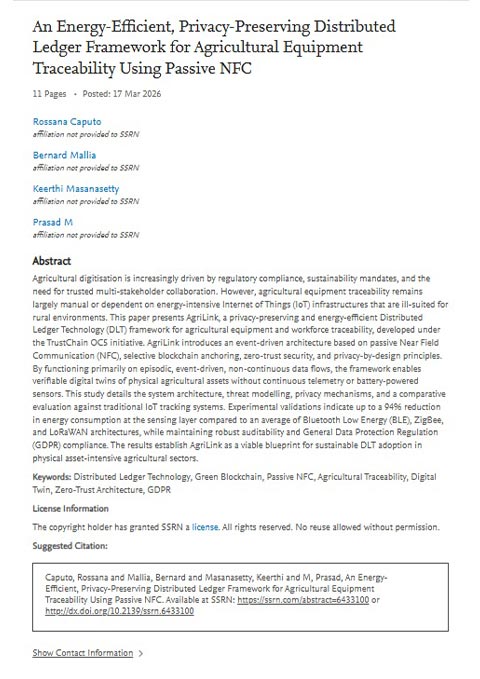
An Energy-Efficient, Privacy-Preserving Distributed Ledger Framework for Agricultural Equipment Traceability Using Passive NFC
Rossana Caputo, Bernard Mallia, Keerthi Masanasetty, Prasad M · Preprint, 2026 · DOI 10.2139/ssrn.6433100
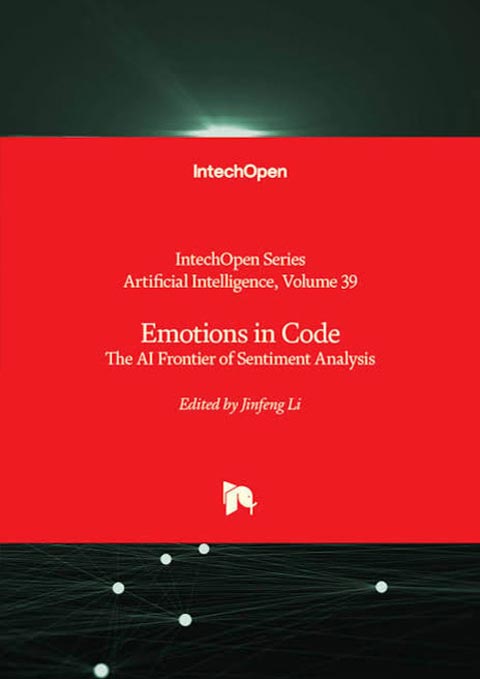
Perspective Chapter: The Faint Whispers of the Heart – Next-Generation Sentiment Analysis and “Empathy Algorithms”
Bernard Mallia · In J. Li (ed.), Emotions in Code – The AI Frontier of Sentiment Analysis, IntechOpen · Book chapter, 2025 · DOI 10.5772/intechopen.1010889
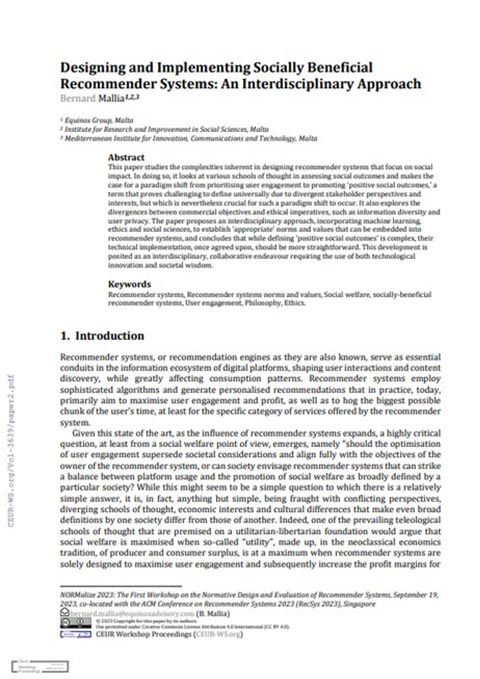
Designing and Implementing Socially Beneficial Recommender Systems: An Interdisciplinary Approach
Bernard Mallia · NORMalize 2023, First Workshop on the Normative Design and Evaluation of Recommender Systems, co-located with ACM RecSys 2023, Singapore · CEUR Workshop Proceedings, Vol. 3639